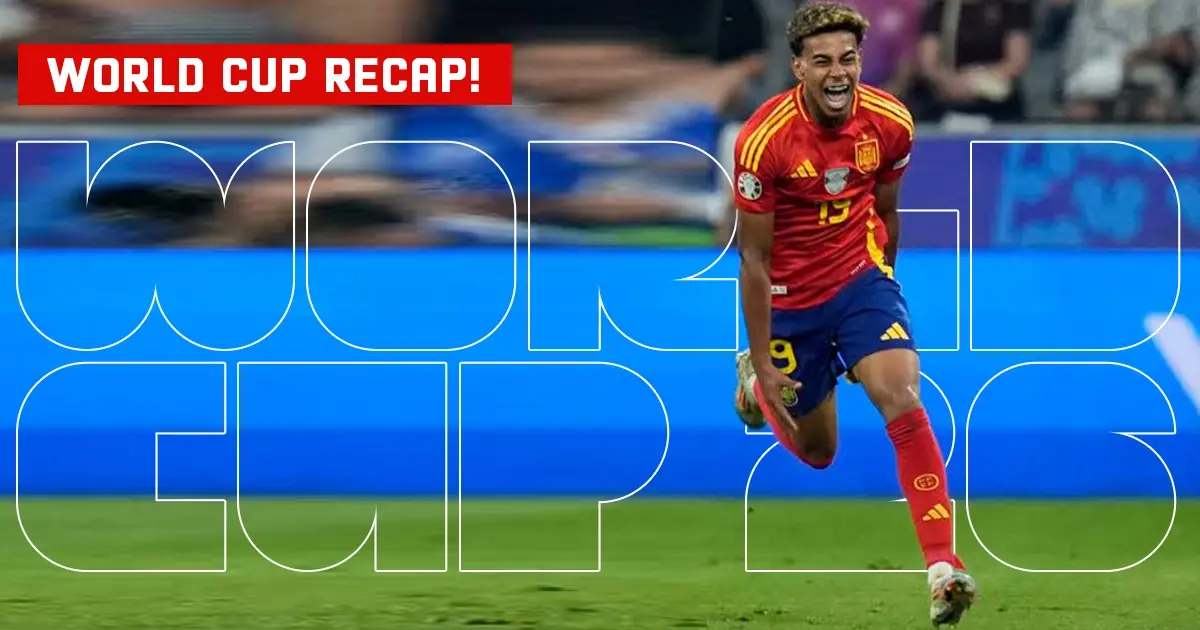

After 104 matches across the United States, Canada and Mexico, the largest FIFA World Cup in history ended with Spain on top.
Spain defeated Argentina 1-0 after extra time in the 2026 World Cup Final, capturing its second men’s World Cup title and first since 2010. Ferran Torres scored the winner in the 106th minute, breaking through an Argentina defense that had held firm for most of the match.
The victory completed an impressive tournament for Spain and ended Argentina’s attempt to become the first back-to-back World Cup champion since Brazil in 1962.
Spain Finishes the Job
Spain’s road to the trophy included knockout-stage victories over Austria, Portugal, Belgium, France and Argentina.
Throughout the tournament, Spain controlled possession, defended at a high level and consistently created chances through its midfield and wide attackers. That balance was on display in the final, where Argentina struggled to generate clear opportunities.
Emiliano Martínez kept Argentina in the match, but Spain continued to apply pressure. After Enzo Fernández was sent off late in regulation, Torres delivered the championship-winning goal in extra time.
Spain conceded only one goal across eight matches, making its defensive performance one of the most impressive parts of the title run.
The United States Reaches the Round of 16
The United States entered the tournament with high expectations while playing on home soil.
The USMNT defeated Bosnia and Herzegovina 2-0 in the Round of 32 before falling 4-1 to Belgium in the Round of 16.
The result was disappointing for a team hoping to make a deeper run, but the tournament still provided valuable knockout-stage experience for a young roster. The United States also generated major national interest and gave fans several encouraging moments during the competition.
Norway Produces a Major Upset
Norway was responsible for one of the biggest surprises of the tournament.
After defeating Ivory Coast in the Round of 32, Norway eliminated Brazil 2-1 in the Round of 16. Its combination of physicality, organization and quick counterattacking proved too much for the five-time champions.
Norway’s run ended with a quarterfinal loss to England, but the victory over Brazil became one of the defining moments of the World Cup.
Traditional Powers Exit Early
Germany, Brazil and Portugal were all eliminated before the quarterfinals.
Germany lost to Paraguay on penalties in the Round of 32. Brazil survived its opening knockout match against Japan before falling to Norway, while Portugal defeated Croatia and then lost 1-0 to Spain.
Those results showed how quickly a talented team can be eliminated in a single-match format. One poor performance was enough to end the tournament for several of the biggest names in international soccer.
England Takes Third Place
England reached the semifinals after defeating DR Congo, Mexico and Norway.
Its title hopes ended with a 2-1 loss to Argentina, but England finished the tournament by defeating France 6-4 in a wild third-place playoff.
France placed fourth, while Kylian Mbappé finished as the tournament’s leading scorer with 10 goals.
The Stars of the Tournament
Spain’s championship was built around a complete team effort.
Rodri controlled matches from midfield and played a central role in Spain’s success. Lamine Yamal provided creativity and attacking danger, while Spain’s defense consistently limited opponents.
Mbappé earned the Golden Boot, and Messi, Harry Kane, Erling Haaland and Romelu Lukaku were among the established stars who delivered memorable performances.
A Historic World Cup
The 2026 tournament was the first to feature 48 teams and a 32-team knockout stage.
The expanded format created more matches, more knockout opportunities and several unexpected results. Norway’s victory over Brazil, Germany’s early elimination and Morocco’s continued success all showed how competitive the field had become.
In the end, Spain was the most complete team.
Its midfield controlled the tempo, its defense rarely broke down and its attack produced when it mattered most. Torres’ extra-time goal will be remembered as the winning moment, but Spain’s second World Cup title was built through a month of disciplined and dominant soccer.Gambling Problem? Call 1-800-GAMBLER